
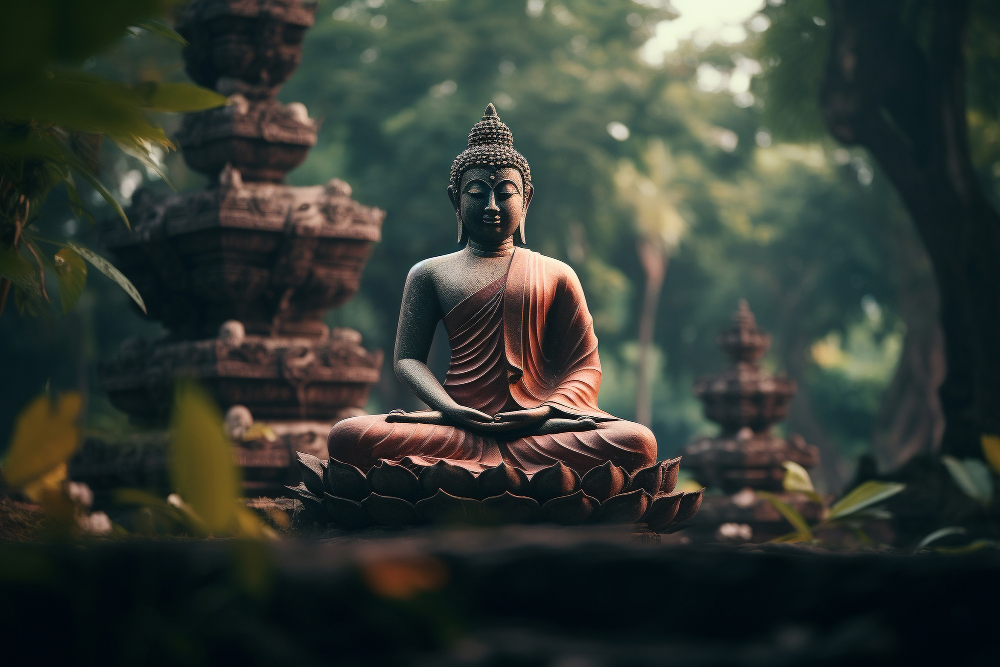
The Life of the Buddha: From Prince to Awakened One
Siddhartha Gautama was born into the Shakya clan in Lumbini, in present-day Nepal. He grew up in royal comfort at Kapilavastu, surrounded by wealth, protection, and fine education. Yet, even in luxury, he felt a quiet sense that something deeper was missing in life. When he ventured beyond the palace walls and saw old age, sickness, death, and a peaceful seeker, these sights awakened powerful questions in his heart: Why do people suffer? Is there a way beyond pain and loss?
At the age of 29, Siddhartha left behind his royal life, his family, and his comforts to search for truth. He lived as a wandering seeker and practised harsh self-denial for many years. However, he realised that extreme bodily suffering did not bring wisdom. Choosing balance instead of extremes, he followed what later became known as the Middle Path.
Sitting in deep meditation under the Bodhi tree at Bodh Gaya in India, Siddhartha awakened to the true nature of life and became the Buddha, the Awakened One. For the next 45 years, he travelled from village to village, teaching people how to live with wisdom, compassion, and awareness. In Kushinagar, he entered Mahaparinirvana, reminding his followers that life is impermanent and that the Dhamma should guide them after his passing. These key moments- birth, renunciation, awakening, teaching, and passing- form the life stages that pilgrims follow in person and in spirit.
At the age of 29, Siddhartha left behind his royal life, his family, and his comforts to search for truth. He lived as a wandering seeker and practised harsh self-denial for many years. However, he realised that extreme bodily suffering did not bring wisdom. Choosing balance instead of extremes, he followed what later became known as the Middle Path.
The Buddha’s Core Teachings: Simple Wisdom for Everyday Life
The Buddha’s teachings are not meant only for monks or scholars. They are simple, practical, and deeply human. At the heart of his message are the Four Noble Truths: that life includes suffering, that suffering has causes such as craving and ignorance, that suffering can end, and that there is a path that leads to freedom from suffering.
The Noble Eightfold Path offers a balanced way of living through right understanding, right intention, right speech, right action, right livelihood, right effort, right mindfulness, and right meditation. These steps guide people to live with clarity, ethical conduct, and inner calm. The Buddha also taught mindfulness, compassion, non-violence, and awareness of impermanence. These teachings help people today deal with stress, anger, fear, and confusion in everyday life.
In essence, the Buddha imparted lessons on clear perception, judicious action, and compassionate living. When pilgrims traverse the venerable path exemplified by his life, they engage not merely in historical learning but actively embody these principles in the present moment.
Why Pilgrimage Is Important in Buddhism (with Classical Literature Reference)?
Pilgrimage in Buddhism is not a later tradition; it is rooted in early Buddhist literature. In the Mahāparinibbāna Sutta of the Pāli Tipiṭaka (Dīgha Nikāya 16), the Buddha is recorded as advising that there are four places worthy of reverence: the place of his birth, the place of his enlightenment, the place where he first taught the Dhamma, and the place where he attained Nirvana. The text explains that those who visit these places with faith and devotion will benefit in their spiritual growth.
This teaching forms the foundation of pilgrimage to Lumbini (birth), Bodh Gaya (enlightenment), Sarnath (first teaching), and Kushinagar (Mahaparinirvana). Visiting these places connects the teachings to real locations where the Buddha lived and taught. Physical presence in these sacred spaces often deepens reflection, steadies the mind, and opens the heart.
Pilgrimage also shapes inner qualities. Travelling mindfully, walking slowly, offering respect, meditating, and listening in silence build humility, patience, gratitude, and determination. Over centuries, pilgrim journeys helped preserve Buddhist heritage and revive sacred sites. Pilgrimage builds community as well: shared prayers, shared meals, and shared silence create bonds among people from different cultures who walk the path together.
Why a Common Person Should Visit the Buddha’s Sacred Places
In modern life, many people feel rushed, stressed, and disconnected. A Buddhist pilgrimage offers something rare: stillness. Sitting quietly in Bodh Gaya, walking peacefully in Lumbini, or reflecting in Kushinagar allows the mind to rest. Many visitors describe these places as a “reset” for the heart and mind.
The Buddha’s life choices, leaving privilege, choosing balance, living with compassion, mirror questions people face today about ambition, success, and happiness. Seeing where he lived and taught makes these lessons feel real and personal. The pilgrimage also offers rich cultural learning. Ruins, stupas, monasteries, and living prayer halls connect history, art, and living faith. Many travellers combine meditation practice and mindful walking with visiting sacred sites, making the journey supportive of mental health and emotional balance.
The Four Most Sacred Places of the Buddha
Lumbini, Nepal — Birthplace of the Buddha:- Lumbini marks the birthplace of Prince Siddhartha. The peaceful garden setting and ancient markers represent beginnings and the potential for awakening within every human life. Many pilgrims start their journey here to set a tone of humility and fresh intention.
Bodh Gaya, India — Place of Enlightenment: Bodh Gaya is the spiritual heart of Buddhism. The Mahabodhi Temple and the Bodhi tree mark the place where Siddhartha became the Buddha. Pilgrims often meditate here, experiencing deep stillness and reflection.
Sarnath (Isipatana), India — Where the Teaching Began: Near Varanasi, Sarnath is where the Buddha gave his first sermon and introduced the Four Noble Truths and the Noble Eightfold Path. This is where the Buddhist Sangha began. The site represents wisdom shared with compassion.
Kushinagar, India — Place of Mahaparinirvana: Kushinagar marks the Buddha’s final passing. The reclining Buddha statue invites reflection on impermanence and acceptance. Many pilgrims feel a quiet sense of closure and peace here.
Other Important Buddhist Sites in India
Beyond the four main sites, several places deepen the pilgrimage experience. Rajgir and Nalanda in Bihar are linked with early Buddhist councils and learning, with Nalanda once being a great centre of education. Shravasti was a major centre of monastic life where the Buddha spent many rainy seasons teaching. Vaishali and Sankisa are connected to important events in early Buddhist history. These places offer quieter, reflective stops that enrich the spiritual journey.
Final Reflection: Pilgrimage as a Way of Living
The significance of the Buddha pilgrimage in Buddhism extends beyond mere visits to sacred sites; it encompasses the journey along the inner path of awareness, compassion, and equilibrium. A Buddhist pilgrimage serves simultaneously as a traverse through history and a practice of mindful existence. It encourages individuals to decelerate, engage in sincere reflection, and return with enhanced clarity, humility, and benevolence. Whether undertaken as a believer, a seeker, or a contemplative traveller, these sacred locations of the Buddha present an enduring invitation to lead a life of peace and purpose.
References
- Bukkyo Dendo Kyokai. (2005/2019). The Teaching of Buddha. Tokyo: Society for the Promotion of Buddhism.
- Dīgha Nikāya 16. Mahāparinibbāna Sutta. In Pāli Tipiṭaka.
- Dhammika, S. (1992). Middle Land, Middle Way: A Pilgrim’s Guide to the Buddha’s India. Kandy, Sri Lanka: Buddhist Publication Society.
- Beal, S. (1969). Buddhist Records of the Western World. Delhi: Motilal Banarsidass.
- Giles, H. A. (1923). The Travels of Fa-Hien. London: Routledge.
- Chan, K. S. (2001). Buddhist Pilgrimage. Selangor, Malaysia: Subang Jaya Buddhist Association.
- Ministry of Tourism, Government of India. (n.d.). Buddhist Tourism Circuit in India. New Delhi: Incredible India.